Hydroxyethyl Cellulose (HEC)
Product Name: Hydroxyethyl Cellulose (HEC)
INCI Name: Hydroxyethyl Cellulose
CAS Number: 9004-62-0
EINECS Number: 618-387-5
HS Code: 39123900
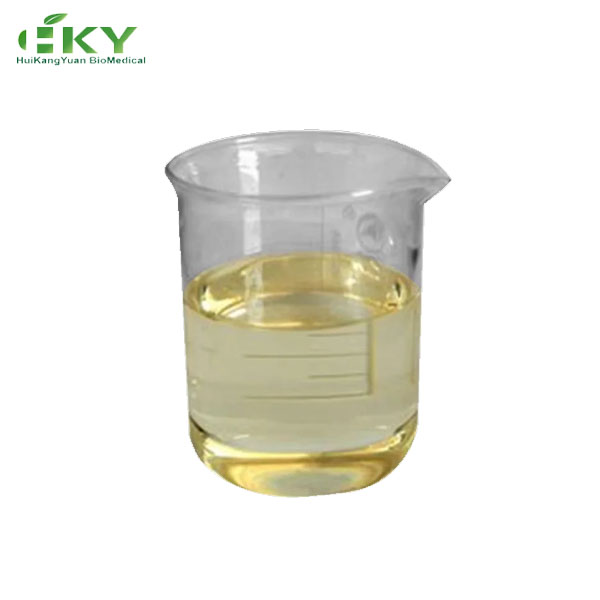
Appearance: White to off-white free-flowing powder
Odor: Odorless, tasteless
pH Value (2% aqueous solution): 6.0 - 8.5
Bulk Density: 0.3 - 0.6 g/cm³
Softening Temperature: ~135-140°C
Decomposition Temperature: ~200°C
Minimum Order Quantity (MOQ): 1 kg (sample), 25 kg (1 bag), 20 MT (full container)
Storage Conditions: Cool, dry place <30°C, sealed bags, protect from moisture
Shelf Life: 24 months from manufacturing date under proper storage
Hydroxyethyl Cellulose, HEC, CAS 9004-62-0, nonionic thickener, cellulose ether, water-based paint thickener, rheology modifier, water retention agent, protective colloid, E467
Hydroxyethyl Cellulose (HEC)-CAS 9004-62-0
Hydroxyethyl Cellulose (HEC) is the most versatile nonionic water-soluble cellulose ether, produced by reacting natural cellulose with ethylene oxide under alkaline conditions. Unlike ionic thickeners, HEC carries no electrical charge, giving it unparalleled compatibility with salts, pH extremes, and all types of surfactant systems.
As the gold standard thickener for water-based latex paints, HEC delivers exceptional rheology control, sag resistance, and pigment suspension stability. Its unique ability to dissolve in both cold and hot water without forming gels makes it indispensable across construction, personal care, oil drilling, pharmaceuticals, and polymer manufacturing. HEC solutions form clear, flexible films and provide outstanding water retention, suspension, and protective colloid properties across the widest possible formulation range.

Key Benefits
✅ Gold standard nonionic thickener for water-based paints✅ Dissolves in BOTH cold and hot water - no heating required
✅ NO gel point - stable at all temperatures
✅ Fully nonionic - compatible with all pH levels (2-12)
✅ Exceptional salt / electrolyte tolerance
✅ Crystal clear solutions - no turbidity
✅ Excellent water retention properties
✅ Superior pigment suspension and anti-settling
✅ Outstanding rheology control and sag resistance
✅ Forms clear, flexible, water-soluble films
✅ Perfect protective colloid for emulsion polymerization
✅ Compatible with ALL surfactant types (anionic, cationic, nonionic, amphoteric)
✅ Natural cellulose-based - renewable raw material
Applications
Personal Care & Cosmetics (15%):
• Shampoos & Body Washes: 0.2-1.0% - thickener & foam stabilizer
• Hair Gels & Styling Products: 0.5-2.0% - film-forming & hold
• Facial Cleansers & Scrubs: 0.3-1.0% - particle suspension
• Lotions & Creams: 0.1-0.5% - co-thickener & stabilizer
• Toothpaste: 0.5-2.0% - binder & texture
Other Industrial Applications:
• Emulsion Polymerization: 0.5-2.0% - protective colloid
• Paper Coatings: 0.1-0.5% - rheology modifier
• Detergents: 0.1-0.5% - anti-redeposition agent
• Textile Printing: 0.5-2.0% - thickener
Certificate Of Analysis (COA)
Test Item | Specification | Test Result | Test Method |
Product Identification | |||
Product Name | Hydroxyethyl Cellulose HEC 10000 | HEC 10000 Standard | —— |
CAS Number | 9004-62-0 | 9004-62-0 | —— |
Grade | Surface Treated (S-Type) | Surface Treated | —— |
Physical Properties | |||
Appearance | White to off-white powder | White free-flowing powder | Visual |
Odor | Odorless | Odorless | Olfactory |
Bulk Density | 0.3-0.6 g/cm³ | 0.45 g/cm³ | Gravimetric |
Particle Size (100 mesh) | ≥98% passing | 99.2% passing | Sieve |
Particle Size (200 mesh) | ≥90% passing | 94.5% passing | Sieve |
Viscosity | |||
Viscosity (2% soln, 25°C) | 8000-12000 mPa·s | 9850 mPa·s | Brookfield |
Viscosity Accuracy | ±15% | Within spec | —— |
Chemical Properties | |||
Molar Substitution (MS) | 1.8-2.0 | 1.88 | Titration |
pH Value (2% Solution) | 6.0-8.5 | 7.2 | pH Meter |
Moisture Content | ≤5.0% | 3.2% | Karl Fischer |
Ash Content (as Na₂SO₄) | ≤5.0% | 2.8% | Gravimetric |
Water Insolubles | ≤0.5% | 0.18% | Filtration |
Safety & Impurities | |||
Heavy Metals (as Pb) | ≤20 ppm | <10 ppm | ICP-MS |
Arsenic (As) | ≤2 ppm | <0.5 ppm | ICP-MS |
Microbiological | |||
Total Aerobic Count | ≤1000 CFU/g | <100 CFU/g | Plate Count |
Yeast & Mold | ≤100 CFU/g | <10 CFU/g | Plate Count |
E. coli, Salmonella | Negative | Negative | —— |
Final Conclusion | —— | PASSED - EXCEEDS SPECIFICATION | —— |
Frequently Asked Questions (FAQ) & Document Request Frequently Asked Questions (FAQ) & Document Request
Q: How do I choose the right HEC viscosity grade for my application?A: Viscosity grade = product structure - use this selection guide:
Viscosity Grade | 2% Viscosity (cps) | Typical Applications |
HEC 100 | 80-150 | Food, pharmaceuticals, low-visc coatings |
HEC 1000 | 800-1500 | Paints, inks, construction |
HEC 4000 | 3000-5000 | Most common general purpose |
HEC 10000 | 8000-12000 | Standard latex paint grade |
HEC 30000 | 25000-35000 | High-build coatings, oil drilling |
HEC 60000 | 50000-70000 | Texture paints, high-sag resistance |
HEC 100000 | 80000-120000 | Fracturing fluids, super thick |
Rule of Thumb: |
• Flowable products: Use LOW viscosity (100-4000)
• Structured / thick products: Use HIGH viscosity (10000+)
• Not sure? Start with HEC 10000 - it's the universal workhorse
Higher viscosity grade = less HEC needed = lower cost per kg of product.
Contact Us
💌 Contact us today for technical data, formulation guidance, and competitive pricing! E-mail:
You Might Also Like
1.ur Products A full range of high-quality cosmetic raw materials, including plant extracts, natural active ingredients, skin care actives and formulation additives. Stable supply & strict quality control.