Test--Hydroxypropyl Tetrahydropyrantriol (Pro-Xylane) - CAS 439685-79-7
Product Name: Hydroxypropyl Tetrahydropyrantriol (Pro-Xylane)
INCI Name: HYDROXYPROPYL TETRAHYDROPYRANTRIOL
CAS Number: 439685-79-7
Molecular Formula: C₈H₁₆O₅
Molecular Weight: 192.21 g/mol
Product Grade: Cosmetic grade
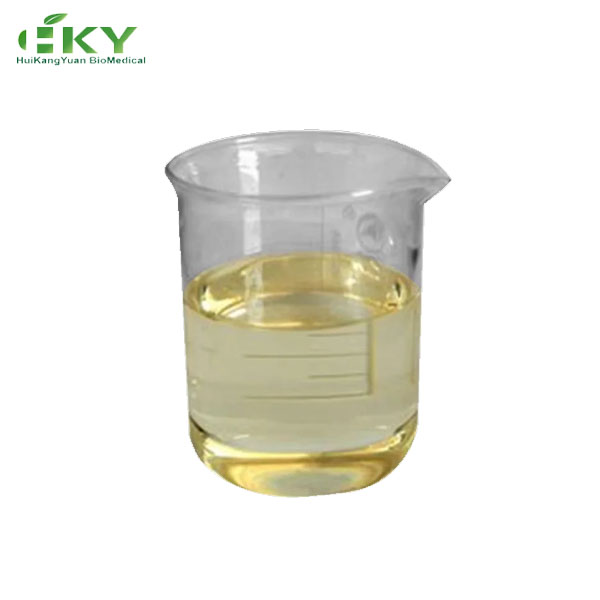
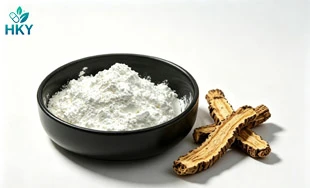
Appearance (30% solution): Colorless to pale yellow clear viscous liquid; Appearance (pure powder): White to off-white crystalline powder
Odor: Odorless or very faint characteristic odor
Product Purity (powder): ≥98.0%
Packaging: 1kg sample bottle, 5kg plastic drum, 25kg plastic drum
Shelf Life: 24 months (30% solution); 36 months (pure powder)
Storage: Store in cool, dry, well-ventilated area, keep sealed, protect from light and high temperature, avoid freezing for solution form
Hydroxypropyl Tetrahydropyrantriol, Pro-Xylane, Proxylane, anti-aging ingredient, GAGs booster, collagen stimulator, skin firming, anti-wrinkle, xylose derivative, C-glycoside, skin barrier repair, dermal epidermal junction, hyaluronic acid booster, cosme
Hydroxypropyl Tetrahydropyrantriol (Pro-Xylane) - CAS 439685-79-7
Hydroxypropyl Tetrahydropyrantriol, commonly known by its trade name Pro-Xylane, is a revolutionary bioactive anti-aging ingredient with the INCI name Hydroxypropyl Tetrahydropyrantriol and CAS number 439685-79-7. As a C-glycoside derived from xylose (wood sugar), this remarkable molecule works by stimulating the biosynthesis of glycosaminoglycans (GAGs) such as hyaluronic acid in the skin's extracellular matrix, while also promoting the production of collagen IV and VII to strengthen the dermal-epidermal junction (DEJ). Originally developed and patented by L'Oréal, Pro-Xylane has become one of the most celebrated anti-aging ingredients in premium skincare, renowned for its unique multi-pathway approach to skin rejuvenation that improves firmness, elasticity, hydration, and overall skin texture. With excellent water solubility, a small molecular weight of 192.21 Da enabling deep dermal penetration, and an exceptional safety profile suitable for all skin types including sensitive skin and pregnant women, Hydroxypropyl Tetrahydropyrantriol is widely used in high-end anti-aging serums, creams, eye care products, and neck treatments worldwide. Approved for use in all major cosmetic markets with no restricted concentration limits, it represents a gold standard in clinically-proven, gentle yet effective anti-aging skincare technology.

Key Benefits
• Stimulates GAGs synthesis: Boosts hyaluronic acid and proteoglycans
• Improves skin firmness: Reduces sagging and enhances facial contours
• Reduces fine lines and wrinkles: Visibly smooths skin texture
• Deep hydration: Enhances skin's natural water retention capacity
• Strengthens skin barrier: Improves dermal-epidermal junction integrity
• Excellent safety: Non-irritating, non-sensitizing, suitable for all skin types
• Deep penetration: Small molecular weight reaches dermis effectively
• High stability: Stable across wide pH range, heat and light resistant
• Synergistic effect: Works well with retinol, vitamin C, peptides
Applications
• Anti-aging serums and essences: Recommended usage 2%–10% (30% solution)
• Anti-wrinkle creams and lotions: Recommended usage 2%–8%
• Eye care products (eye serums, eye creams): Recommended usage 1%–5%
• Neck creams and neck firming treatments: Recommended usage 3%–10%
• Hydrating serums and moisturizers: Recommended usage 1%–5%
• Skin barrier repair products: Recommended usage 2%–8%
• Firming and lifting treatments: Recommended usage 3%–10%
• Anti-aging facial masks: Recommended usage 1%–5%
• Anti-aging body lotions: Recommended usage 1%–3%
• Men's anti-aging skincare: Recommended usage 2%–8%
Certificate Of Analysis (COA)
Test Item | Standard Requirement | Test Result | Test Method |
Appearance | Colorless to pale yellow clear liquid | Complies | Visual inspection |
Odor | Odorless or very faint characteristic odor | Complies | Organoleptic |
Active Content | 28.0%–32.0% | 30.5% | HPLC |
Purity (dry basis) | ≥98.0% | 99.2% | HPLC |
Specific Optical Rotation [α]D²⁰ | -15° to -17° (c=5, water) | -16.2° | Polarimeter |
pH Value (1% solution) | 5.0–7.0 | 5.8 | pH meter |
Refractive Index (20°C) | 1.380–1.390 | 1.385 | Refractometer |
Density (20°C) | 1.100–1.150 g/cm³ | 1.125 g/cm³ | Pycnometer |
Viscosity (25°C) | 50–200 mPa·s | 120 mPa·s | Viscometer |
Moisture Content | 68.0%–72.0% | 69.5% | Karl Fischer |
Heavy Metals (as Pb) | ≤10 ppm | <5 ppm | ICP-MS |
Arsenic (As) | ≤2 ppm | <0.5 ppm | ICP-MS |
Lead (Pb) | ≤5 ppm | <1 ppm | ICP-MS |
Cadmium (Cd) | ≤3 ppm | <0.5 ppm | ICP-MS |
Mercury (Hg) | ≤1 ppm | <0.1 ppm | ICP-MS |
Total Aerobic Count | ≤100 CFU/g | <10 CFU/g | GB 4789.2 |
Mold & Yeast | ≤10 CFU/g | <10 CFU/g | GB 4789.15 |
E. coli | Absent | Absent | GB 4789.3 |
Pseudomonas aeruginosa | Absent | Absent | GB 4789.4 |
Staphylococcus aureus | Absent | Absent | GB 4789.10 |
Conclusion | Complies with cosmetic grade specifications | ||
Frequently Asked Questions (FAQ)
Q1: What makes Pro-Xylane unique compared to other anti-aging ingredients?
A: Pro-Xylane (Hydroxypropyl Tetrahydropyrantriol) is unique because it targets the skin's extracellular matrix and dermal-epidermal junction (DEJ) through multiple pathways, unlike many anti-aging ingredients that focus on just one mechanism. It stimulates glycosaminoglycan (GAGs) synthesis including hyaluronic acid, promotes collagen IV and VII production, and strengthens the DEJ – the critical boundary layer between dermis and epidermis that weakens with age. This multi-target approach delivers comprehensive anti-aging benefits: firming, hydration, wrinkle reduction, and barrier repair simultaneously. As a C-glycoside derived from xylose, it has excellent water solubility and small molecular weight (192.21 Da) that allows deep dermal penetration. It is also exceptionally gentle – non-irritating, non-sensitizing, and suitable for all skin types including sensitive skin and pregnant women – making it ideal for brands targeting premium anti-aging consumers who want effective but gentle skincare. Unlike retinol which can cause irritation, or vitamin C which can be unstable, Pro-Xylane offers high efficacy with excellent tolerability and formulation stability.
Q2: What is the difference between 30% solution and 98% powder forms?
A: Hydroxypropyl Tetrahydropyrantriol is available in two common forms: 30% aqueous solution and 98%+ pure powder, each suited for different formulation needs. The 30% aqueous solution is the most popular and convenient form for cosmetic manufacturers – it is ready-to-use, easy to handle, and can be added directly to the water phase of formulations without dissolution steps. It is typically more cost-effective per unit of active content and is the standard form used in most commercial anti-aging products. The 98% pure powder form offers higher concentration flexibility and is ideal for products where you want the active ingredient to appear higher on the ingredient list, or for formulations where you need to minimize water content. However, the powder requires proper dissolution in water or polar solvents and may be more expensive per kilogram. In terms of efficacy, both forms are identical when used at equivalent active concentrations. Typical usage rates are 2-10% for the 30% solution (providing 0.6-3% pure active) and 0.3-3% for the pure powder. For most anti-aging products, the 30% solution is the recommended choice for ease of use and cost efficiency.
Q3: What are the formulation considerations and shelf life?
A: Shelf life is 24 months for the 30% aqueous solution and 36 months for pure powder in original sealed packaging under proper storage conditions. Store in a cool, dry, well-ventilated area away from direct sunlight and high temperatures; the solution form should not be frozen. Important formulation considerations: Pro-Xylane is water-soluble and should be added to the water phase of your formulation; it is highly soluble in water and most polar solvents like glycerin and propylene glycol. It has excellent stability across a wide pH range of 3.0–10.0, making it compatible with virtually all cosmetic formulation systems including creams, lotions, serums, gels, and masks. It is heat-stable and can withstand typical cosmetic processing temperatures up to 80°C without degradation. It shows excellent compatibility with other popular anti-aging ingredients including retinol, vitamin C, niacinamide, peptides, hyaluronic acid, and ceramides – in fact, it often works synergistically with these ingredients to enhance overall anti-aging efficacy. It is compatible with most cosmetic preservatives, emulsifiers, and thickeners. Because it is non-ionic and neutral in pH, it does not cause formulation instability or incompatibility issues. Always conduct accelerated stability testing in your specific formulation to confirm shelf life performance and compatibility. For best results, it is typically added at 2-10% (30% solution) or 0.3-3% (pure powder) depending on the product positioning and desired efficacy level.
Contact Us
💌 Contact us today for technical data, formulation guidance, and competitive pricing! E-mail:
You Might Also Like
1.ur Products A full range of high-quality cosmetic raw materials, including plant extracts, natural active ingredients, skin care actives and formulation additives. Stable supply & strict quality control.