Trimethylcyclohexyl Salicylate (Homosalate) -CAS 118-56-9
Product Name: Homosalate (Trimethylcyclohexyl Salicylate)
INCI Name: HOMOSALATE
CAS Number: 118-56-9
EINECS Number: 204-260-8
Molecular Formula: C₁₆H₂₂O₃
Molecular Weight: ~262.3 g/mol
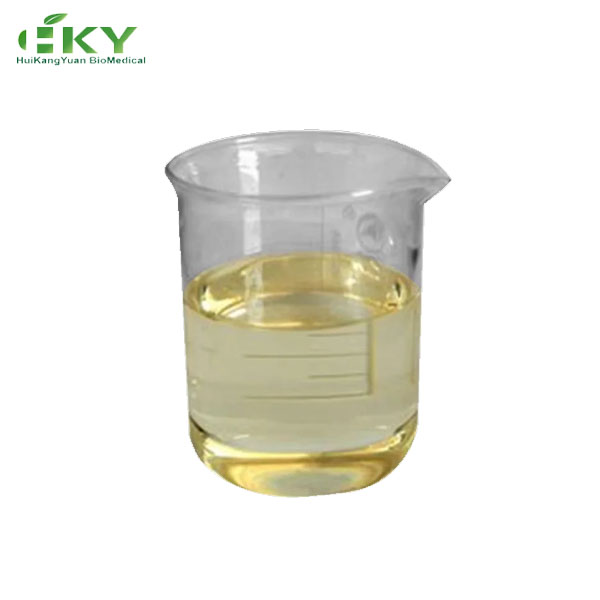
Appearance: Colorless to pale yellow clear liquid
Odor: Very faint characteristic odor or odorless
Product Purity: ≥98.0%
Acid Value: ≤1.0 mgKOH/g
Saponification Value: 200–220 mgKOH/g
Packaging: 1kg sample bottle, 25kg plastic drum
Shelf Life: 24 months
Storage: Store in cool, dry, well-ventilated area, keep sealed, protect from light and heat, keep away from fire and oxidizing agents
Homosalate, Trimethylcyclohexyl Salicylate, 3,3,5-Trimethylcyclohexyl Salicylate, HMS, salicylate sunscreen, UVB filter, oil soluble sunscreen, liquid sunscreen agent, cosmetic UV absorber, sunscreen formulation ingredient
Trimethylcyclohexyl Salicylate (Homosalate) -CAS 118-56-9
Homosalate, with the INCI name Homosalate and CAS number 118-56-9, is a widely used oil-soluble UVB sunscreen agent belonging to the salicylate ester class. Chemically known as 3,3,5-Trimethylcyclohexyl Salicylate, this clear, colorless to pale yellow liquid absorbs UVB radiation in the 295–315 nm range with a peak absorption at approximately 306 nm, effectively protecting the skin from sunburn and UVB-induced damage. As a liquid sunscreen agent at room temperature, Homosalate offers excellent formulation flexibility and is highly soluble in cosmetic oils and organic solvents, making it easy to incorporate into a wide variety of sunscreen and daily care products. Beyond its direct UV-absorbing function, Homosalate also serves as an excellent solvent and solubilizer for other solid or crystalline sunscreen agents like Avobenzone and Octocrylene, helping to maintain formulation stability and clarity. With regulatory approval in all major markets including China (max 10%), the EU (max 10%), the USA (max 15%), and Japan (max 10%), Homosalate is one of the most commonly used and cost-effective UVB filters in the global cosmetics industry, valued for its reliable performance, good skin feel, and versatile formulation compatibility.

Key Benefits
• Effective UVB protection: Absorbs 295–315 nm, peak at 306 nm
• Oil soluble liquid: Easy to formulate, room temperature liquid
• Excellent solubilizer: Dissolves other solid crystalline UV filters
• Good skin feel: Light, non-greasy, smooth application
• Cost effective: High performance at affordable price
• Waterproof compatible: Suitable for water-resistant sunscreens
• Broad formulation compatibility: Works with most cosmetic ingredients
• Globally approved: China, EU, USA, Japan, ASEAN all approved
• Good photostability: Maintains efficacy under UV exposure
• Versatile applications: Sunscreens, daily care, color cosmetics
Applications
• Broad spectrum sunscreens and lotions: Recommended usage 2%–10%
• Daily moisturizers with SPF: Recommended usage 1%–5%
• BB creams, CC creams, and foundations: Recommended usage 1%–8%
• Waterproof sun care formulations: Recommended usage 3%–10%
• Sunscreen sprays and mists: Recommended usage 2%–8%
• Lip sun care products (balms, lipsticks): Recommended usage 1%–5%
• Hair sun protection products: Recommended usage 1%–3%
• Body sun care lotions and creams: Recommended usage 2%–10%
• Children's sun care products: Recommended usage 2%–5%
• After-sun products with UV protection: Recommended usage 1%–3%
Certificate Of Analysis (COA)
Test Item | Standard Requirement | Test Result | Test Method |
Appearance | Colorless to pale yellow clear liquid | Complies | Visual inspection |
Purity (HPLC) | ≥98.0% | 99.2% | HPLC |
UV Assay (at 306 nm) | 90.0%–110.0% | 102.5% | UV-Vis spectrophotometer |
Acid Value | ≤1.0 mgKOH/g | 0.3 mgKOH/g | Potentiometric titration |
Saponification Value | 200–220 mgKOH/g | 212 mgKOH/g | Potentiometric titration |
Density (25°C) | 1.040–1.060 g/cm³ | 1.052 g/cm³ | Pycnometer |
Refractive Index (20°C) | 1.500–1.505 | 1.503 | Refractometer |
Specific Extinction Coefficient (E1% 1cm, 306 nm) | ≥80 | 88 | UV-Vis spectrophotometer |
Moisture Content | ≤0.5% | 0.12% | Karl Fischer |
Heavy Metals (as Pb) | ≤10 ppm | <5 ppm | ICP-MS |
Arsenic (As) | ≤2 ppm | <0.5 ppm | ICP-MS |
Lead (Pb) | ≤5 ppm | <1 ppm | ICP-MS |
Cadmium (Cd) | ≤3 ppm | <0.5 ppm | ICP-MS |
Mercury (Hg) | ≤1 ppm | <0.1 ppm | ICP-MS |
Total Aerobic Count | ≤100 CFU/g | <10 CFU/g | GB 4789.2 |
Mold & Yeast | ≤10 CFU/g | <10 CFU/g | GB 4789.15 |
E. coli | Absent | Absent | GB 4789.3 |
Pseudomonas aeruginosa | Absent | Absent | GB 4789.4 |
Staphylococcus aureus | Absent | Absent | GB 4789.10 |
Conclusion | Complies with cosmetic grade specifications | ||
Frequently Asked Questions (FAQ)
Q1: What makes Homosalate different from other salicylate sunscreen agents?
A: Homosalate is unique among salicylate sunscreens because it is a liquid at room temperature, unlike Octisalate (Octyl Salicylate) which is also liquid but has different solubility characteristics, and other salicylates that may be solid. Its 3,3,5-trimethylcyclohexyl group gives it excellent oil solubility and a very low freezing point below -5°C, so it remains liquid even in cold storage conditions and does not crystallize in formulations. Homosalate also has exceptional solvent capacity for other solid crystalline UV filters like Avobenzone, Bemotrizinol, and Bis-Ethylhexyloxyphenol Methoxyphenyl Triazine, making it invaluable for formulating clear, high-SPF sunscreen systems. Its peak absorption at 306 nm is slightly longer wavelength than Octisalate at ~300 nm, giving it marginally better UVA II coverage. Finally, Homosalate is one of the most cost-effective UVB filters available, providing reliable performance at a lower cost compared to premium triazine or benzotriazole filters.
Q2: How does Homosalate compare to Octinoxate (Ethylhexyl Methoxycinnamate / OMC)?
A: Homosalate and Octinoxate (OMC) are both widely used UVB sunscreen agents, but they have important differences. Octinoxate has stronger UVB absorption with a higher specific extinction coefficient (~620-680 vs ~80-90 for Homosalate), so you need much less OMC to achieve the same SPF contribution. However, Homosalate is a liquid at room temperature while OMC can crystallize at lower temperatures, making Homosalate easier to handle and formulate. Homosalate has much better solubilizing power for other solid UV filters, while OMC does not have this benefit. Homosalate is generally considered more photostable than OMC, which degrades more significantly under UV exposure. OMC has a slightly longer absorption peak at ~310 nm vs ~306 nm for Homosalate. In terms of cost, Homosalate is typically more affordable per kilogram, though OMC is more potent per unit weight. The two are often used together in formulations for synergistic SPF boosting and broader UVB coverage, and Homosalate also helps solubilize and stabilize OMC in the oil phase.
Q3: What is the shelf life and are there any formulation considerations?
A: Shelf life is 24 months in original sealed packaging under proper storage conditions. Store in a cool, dry, well-ventilated area away from direct sunlight, heat, fire, and oxidizing agents. Homosalate has good chemical stability, which contributes to its long shelf life. Important formulation considerations: Homosalate is oil-soluble and should be added to the oil phase of your formulation; it is highly soluble in most cosmetic oils and organic solvents.
Contact Us
💌 Contact us today for technical data, formulation guidance, and competitive pricing! E-mail:
You Might Also Like
1.ur Products A full range of high-quality cosmetic raw materials, including plant extracts, natural active ingredients, skin care actives and formulation additives. Stable supply & strict quality control.