Adenosine Powder - CAS 58-61-7
Product Name: Adenosine Powder
INCI Name: ADENOSINE
CAS Number: 58-61-7
EINECS Number: 200-389-9
Molecular Formula: C₁₀H₁₃N₅O₄
Molecular Weight: 267.24 g/mol
Product Grade: Cosmetic grade / Food grade
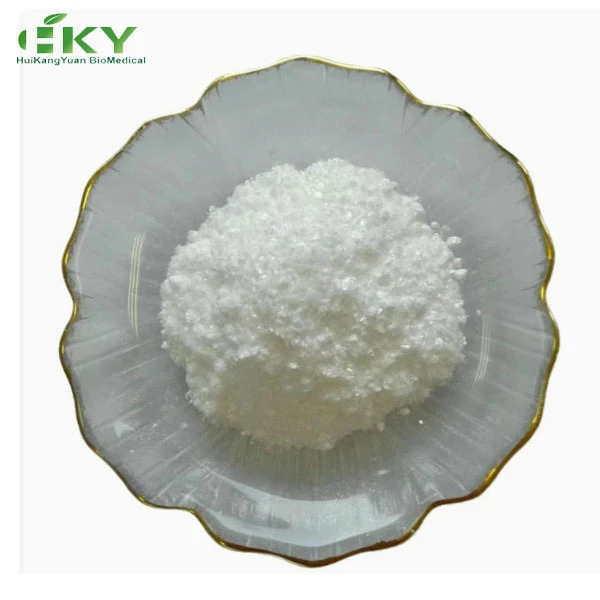
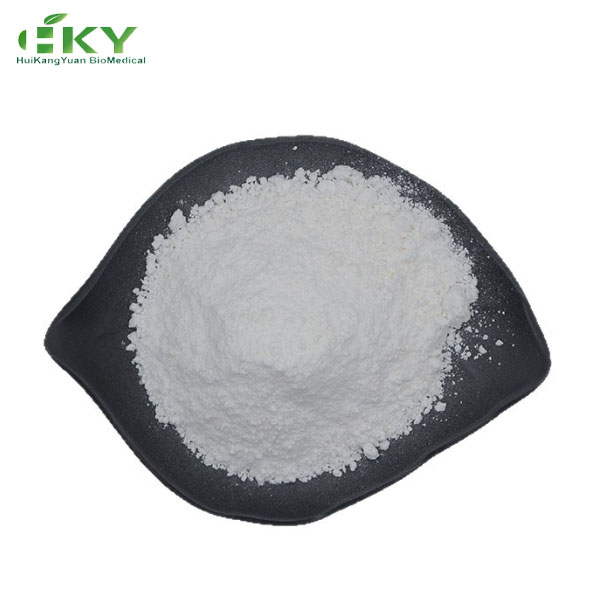
Appearance: White to off-white crystalline powder
Odor: Odorless or slight characteristic odor
Taste: Slightly bitter
Purity: ≥98.0% (standard grade) or ≥99.0% (high purity grade)
Melting Point: 234–236°C
Packaging: 100g aluminum foil bag, 1kg aluminum foil bag, 5kg aluminum foil bag, 25kg fiber drum
Shelf Life: 24 months in original sealed packaging under proper storage conditions (cool, dry, dark, below 25°C)
Storage: Store in cool, dry, well-ventilated area, keep tightly sealed, protect from light, moisture, and heat; recommended storage temperature below 25°C; hygroscopic – avoid exposure to humid air; for long-term storage, refrigeration at 2–8°C is preferred
Adenosine, Adenosine Powder, Adenosine cosmetic ingredient, anti-aging adenosine, anti-wrinkle ingredient, skin conditioning agent, collagen booster, skin firming, adenosine for wrinkles, skin elasticity, anti-inflammatory skincare, hair growth, dermal fi
Adenosine Powder - CAS 58-61-7
Adenosine Powder, with INCI name Adenosine and CAS number 58-61-7, is a naturally occurring nucleoside that has emerged as a highly regarded anti-aging and skin-conditioning ingredient in modern cosmetics, particularly renowned in Korean skincare. Adenosine is an endogenous molecule present in all living cells, where it plays fundamental roles in energy metabolism as a component of ATP (adenosine triphosphate) and ADP (adenosine diphosphate).
In skincare, adenosine works through its specific receptor interactions – primarily activating A₁ and A₂A purinergic receptors in different skin layers to deliver multiple benefits. In the dermis, it stimulates fibroblast activity and collagen synthesis; in the hypodermis, it supports adipogenesis for plumper skin; and throughout the skin, it exerts anti-inflammatory effects. What makes adenosine particularly valuable is its excellent safety profile and gentleness compared to other anti-aging actives like retinoids – it's well-tolerated by sensitive skin and can be used by those who cannot tolerate retinol.
Key Benefits
• Stimulates collagen synthesis for firmer, more youthful skin
• Reduces fine lines and wrinkles, especially crow's feet and nasolabial folds
• Improves skin elasticity and firmness
• Promotes skin plumpness by supporting adipogenesis in hypodermis
• Potent anti-inflammatory: soothes redness and calms irritated skin
• Gentle alternative to retinoids – suitable for sensitive skin
• Enhances skin cell metabolism and energy production
• Supports skin barrier function and moisture retention
• Promotes hair growth and improves hair density
• Excellent safety profile, suitable for long-term daily use
Applications
• Anti-aging serums: Recommended usage 0.04%–0.5%
• Anti-wrinkle creams and lotions: Recommended usage 0.04%–0.3%
• Firming and lifting products: Recommended usage 0.1%–0.5%
• Eye creams and eye serums: Recommended usage 0.05%–0.2%
• Soothing and calming products: Recommended usage 0.02%–0.2%
• Moisturizing creams: Recommended usage 0.01%–0.1%
• Hair growth serums and tonics: Recommended usage 0.1%–1.0%
• Facial masks: Recommended usage 0.05%–0.3%
• Essences and ampoules: Recommended usage 0.04%–0.5%
• Men's anti-aging skincare: Recommended usage 0.04%–0.3%
Certificate Of Analysis (COA)
Test Item | Standard Requirement | Test Result | Test Method |
Appearance | White to off-white crystalline powder | Complies | Visual inspection |
Identification (IR) | Conforms to reference standard | Complies | IR Spectrophotometry |
Purity (HPLC) | ≥99.0% | 99.6% | HPLC |
Specific Optical Rotation | -68.0° to -72.0° (c=1, H₂O) | -70.2° | Polarimetry |
Melting Point | 234–236°C | 234.5–235.5°C | Melting point apparatus |
pH (1% aqueous solution) | 6.5–7.5 | 7.0 | pH meter |
Moisture Content | ≤0.5% | 0.23% | Karl Fischer titration |
Residue on Ignition | ≤0.1% | 0.05% | Gravimetric |
Heavy Metals (as Pb) | ≤10 ppm | <5 ppm | ICP-MS |
Arsenic (As) | ≤2 ppm | <0.5 ppm | ICP-MS |
Lead (Pb) | ≤5 ppm | <1 ppm | ICP-MS |
Cadmium (Cd) | ≤3 ppm | <0.5 ppm | ICP-MS |
Mercury (Hg) | ≤1 ppm | <0.1 ppm | ICP-MS |
Related Substances | Total impurities ≤1.0% | 0.3% | HPLC |
Adenine Content | ≤0.5% | 0.15% | HPLC |
Total Aerobic Count | ≤1000 CFU/g | <100 CFU/g | USP <61> |
Mold & Yeast | ≤100 CFU/g | <10 CFU/g | USP <61> |
E. coli | Absent | Absent | USP <62> |
Salmonella | Absent | Absent | USP <62> |
Staphylococcus aureus | Absent | Absent | USP <62> |
Conclusion | Complies with specification | ||
Frequently Asked Questions (FAQ)
Q1: How stable is adenosine in cosmetic formulations, and what affects its stability?
A: Adenosine has moderate to good stability in cosmetic formulations, but there are several factors that can affect its stability that formulators should be aware of. pH is one of the most important factors – adenosine is most stable at neutral to slightly acidic pH (around pH 5.5–7.0). At very low pH (below 4.0) or very high pH (above 9.0), adenosine can degrade more rapidly through hydrolysis of the glycosidic bond. For leave-on skincare products that are typically formulated at pH 5.0–6.5, this is usually not a problem, but it's something to consider for highly acidic products like exfoliants. Temperature is another key factor – adenosine is relatively heat-stable compared to many actives, but prolonged exposure to high temperatures (above 80°C) can cause degradation. It's generally safe to add adenosine at temperatures up to 60–70°C, but for best stability, it's recommended to add it during the cool-down phase at 40–50°C if possible. Light exposure can also affect stability – adenosine should be protected from direct UV light, which is why opaque or amber packaging is recommended for finished products. Oxidation is generally not a major concern with adenosine (unlike vitamin C or many polyphenols), but antioxidants can still help maintain overall formulation stability. The presence of certain ingredients can also influence stability – adenosine is generally compatible with most cosmetic ingredients, but strong oxidizing agents or highly reactive species should be avoided. Typical shelf life of adenosine in properly formulated and packaged cosmetic products is 18–24 months, which is standard for most skincare products. To maximize stability: formulate at pH 5.0–7.0, avoid prolonged high-temperature processing, use appropriate preservatives to prevent microbial degradation, use opaque or light-protective packaging, and store finished products in cool conditions. You can also verify stability through accelerated stability testing (40°C/75% RH for 3 months) to confirm shelf life for your specific formula.
Q2: Can adenosine be combined with other active ingredients, and what are the best synergistic combinations?
A: Adenosine is highly compatible with most cosmetic active ingredients and can be effectively combined with many of them for enhanced benefits. Here are some of the best synergistic combinations: 1) Adenosine + Peptides: This is one of the most popular and effective combinations. Both adenosine and peptides (like Matrixyl, Argireline, copper peptides) work on collagen synthesis and anti-aging, but through different pathways – adenosine via receptor activation, peptides via direct signaling. They complement each other well and are often paired in premium anti-aging serums. 2) Adenosine + Retinol: Combining adenosine with retinol is smart for two reasons: first, adenosine's anti-inflammatory and soothing properties can help reduce the irritation, redness, and peeling that often come with retinol use, making retinol more tolerable for sensitive skin. Second, both ingredients stimulate collagen through different mechanisms, providing enhanced anti-aging efficacy. This combination is great for "gentle retinol" formulations. 3) Adenosine + Hyaluronic Acid: While hyaluronic acid primarily provides hydration and plumping, it creates an optimal skin environment that helps adenosine work more effectively. The hydration also improves the appearance of plumpness and reduces the look of fine lines. 4) Adenosine + Niacinamide: Niacinamide improves barrier function, brightens skin, and regulates sebum, while adenosine provides anti-aging and anti-inflammatory benefits. They work well together for multi-benefit formulations targeting both aging and skin texture. 5) Adenosine + Centella Asiatica / Madecassoside: For sensitive skin or soothing formulations, combining adenosine with centella asiatica extract or madecassoside provides powerful anti-inflammatory and barrier-repair benefits. 6) Adenosine + Vitamin C: Both are antioxidants and anti-aging ingredients, though vitamin C is more focused on brightening and collagen synthesis, while adenosine focuses more on receptor-mediated collagen stimulation and anti-inflammation. They can be combined, but ensure the pH is appropriate for both – vitamin C works best at lower pH while adenosine prefers neutral. 7) Adenosine + Caffeine: For eye creams, combining adenosine (anti-wrinkle, firming) with caffeine (de-puffing, circulation) is a classic and effective combination. 8) Adenosine + Biotin / other hair actives: For hair growth products, adenosine pairs well with biotin, caffeine, saw palmetto, or minoxidil (where allowed) for multi-pathway hair growth support. The key is that adenosine is a versatile, well-tolerated active that plays nicely with others – it's a great "team player" ingredient that can enhance the efficacy of your formulation's other actives while adding its own anti-aging and soothing benefits.
Contact Us
💌 Contact us today for technical data, formulation guidance, and competitive pricing! E-mail:
You Might Also Like
1.ur Products A full range of high-quality cosmetic raw materials, including plant extracts, natural active ingredients, skin care actives and formulation additives. Stable supply & strict quality control.